

Starting a startup or preparing to register one? You should read this first, before you move ahead.
Every year, thousands of founders in India rush to “register” their startup.
They pick a name, file incorporation documents, post the LinkedIn update, and feel like the journey has officially begun. It feels like a milestone, a moment of legitimacy, and a visible step forward.
But here is the quiet truth that no one tells.
Registration is not just a legal formality. It is a strategic decision.
The structure you choose on Day 0 quietly shapes your taxes, funding eligibility, compliance burden, investor perception, and even your ability to scale. Many founders realise this only after their first funding conversation, tax notice, or investor due diligence, when structural decisions begin to manifest in practice.
India today has one of the fastest-growing startup ecosystems globally, with over 200,000 startups officially recognised under the Startup India initiative (DPIIT). However, recognition and registration do not automatically translate into long-term scale. Many early ventures stall not because their ideas lack potential, but because foundational decisions around structure, compliance, and funding readiness are taken too quickly or without full clarity.
This is why incorporation should not be treated as a quick formality or symbolic milestone. It is a strategic decision that defines how your startup operates, raises capital, manages risk, and evolves over time. So before you register your startup in India, here are 12 things no one tells first-time founders, but absolutely should.
Most founders begin their journey by choosing a name. It feels creative, exciting, and brand-led. However, your startup name is not just a branding choice. It is also a legal and regulatory decision.
Many founders choose a name for creative or trend appeal, only to later face trademark conflicts, domain issues, or regulatory objections during approval. According to MCA guidelines, company name approval depends on uniqueness and legal availability, and a significant number of applications require resubmission due to similarity or non-compliance with naming rules.
Changing a company name later affects legal documents, customer recall, and brand consistency. This is why early diligence on name availability, trademarkability, and long-term relevance is critical before you even begin the registration process.
This is one of the most common and expensive mistakes first-time founders make.
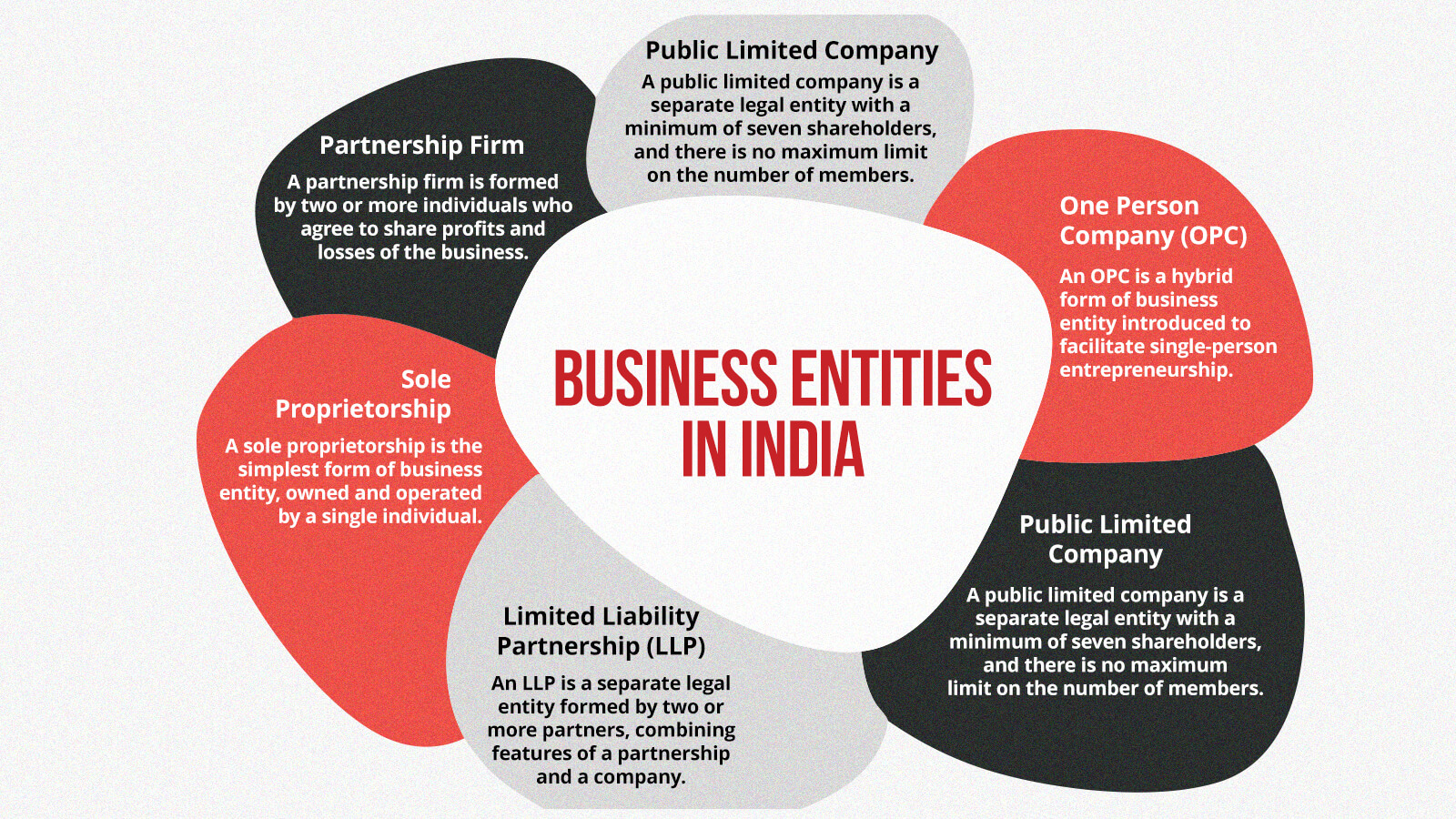
India offers multiple structures such as Sole Proprietorship, Partnership Firm, LLP, and Private Limited Company. On the surface, they appear to be simple legal formats. In practice, they define how flexible, fundable, and scalable your startup becomes.
Private Limited Companies dominate the venture-backed ecosystem because they allow equity issuance and structured ownership. LLPs and proprietorships are often chosen for convenience but later require restructuring when growth or funding becomes a priority.
As of January 31, 2025, India had over 28 lakh registered companies, and nearly 96% of them were Private Limited Companies, according to the Ministry of Corporate Affairs’ Monthly Information Bulletin. This clearly shows that most founders naturally lean toward this structure when formalising their ventures, given limited liability, easier fundraising, and long-term continuity.
Your structure affects more than compliance. It directly influences taxes, legal obligations, liability protection, and funding readiness.
3. Registration Is Not Just Paperwork. It Defines Your Future
Most founders treat registration as a checklist item before real work begins. In reality, it defines your startup’s legal identity, ownership structure, and operational flexibility. It becomes the basis for every future decision.
When you incorporate a company in India, it becomes a separate legal entity that can own assets, enter into contracts, and raise capital independently of the founder. This single shift changes how investors, banks, and partners interact with your business.
It directly impacts liability protection, investor credibility, scalability, and long-term governance. What feels like a small administrative step is actually a foundational strategic move.
4. Startup India Registration Is Not the Same as Company Registration
This confusion is extremely common among first-time founders. Incorporating your company and getting Startup India recognition are two entirely different processes.
The first step is to incorporate your entity with the MCA and ROC. The second is applying for DPIIT recognition under the Startup India initiative. Many founders stop after incorporation and assume they are already part of the recognised startup ecosystem.
As per official data, over 2.07 lakh entities were recognised as startups by DPIIT as of December 31, 2025. However, this represents only a fraction of the total Private Limited Companies, LLPs, and Partnership Firms incorporated in India, many of which may be eligible but have not applied for recognition.
This means many startups miss out on tax exemptions, IP support, and regulatory benefits simply due to lack of awareness.
5. If You Ever Want Funding, Your Structure Decision Is Already Made
Many founders assume they can start simple and “convert later” when investors show interest. While this sounds practical in the early days, it rarely works as smoothly as expected. Structural changes during fundraising often slow the process and create avoidable legal and documentation complexities.
In reality, most venture capitalists and institutional investors prefer Private Limited Companies because they offer clearer ownership, cleaner cap tables, and stronger governance visibility. Structures such as LLPs or proprietorships do not readily support equity issuance, making investment structuring more complex and time-consuming.
Insights from NASSCOM and broader ecosystem reports also suggest that startups with investor-ready structures tend to attract funding faster than informally structured ventures. Even small structural gaps can delay due diligence, reduce investor confidence, and slow down funding conversations at a critical growth stage.
This is why, if funding is even a remote possibility, choosing the right structure from the beginning is not just a legal choice but a strategic one that can significantly ease your fundraising journey later.
6. Your Cap Table Thinking Should Start Before Registration
Founders often focus on product, pitch decks, and go-to-market strategy while postponing ownership discussions. However, cap table clarity becomes significantly harder after incorporation if not structured thoughtfully from the start.
Questions around co-founders, ESOP allocation, angel investments, and future dilution should ideally be considered early. Later equity restructuring involves legal documentation, approvals, and additional costs that can slow momentum during critical growth stages.
7. Taxes Do Not Start Later. They Start From Day One
A common assumption among first-time founders is that taxes become relevant only after revenue begins. In reality, your registration structure influences tax treatment from day one, including corporate taxation, GST applicability, ESOP taxation, and angel tax considerations.
For instance, recognised startups in India can claim a 100% income tax exemption on profits for three consecutive financial years within the first ten years of incorporation under Section 80-IAC of the Income Tax Act. To qualify, the entity must be DPIIT-recognised, incorporated as a Private Limited Company or LLP between April 1, 2016, and March 31, 2030, and be working towards innovation or scalable business models.
This is why choosing the right structure early matters. A rushed decision can lead to inefficient tax pathways that become significantly harder to optimise later, especially as the startup scales or prepares to raise funds.
8. Compliance Is the Hidden Cost No One Mentions
Registration is a one-time activity. Compliance is an ongoing commitment, and this is where many founders begin to feel the real operational burden of their structural choices.
Depending on the entity type, founders must manage annual filings, statutory audits, board resolutions, and GST compliance. Private Limited Companies offer scalability and investor-readiness but come with higher compliance obligations, while proprietorships are simpler but riskier in terms of credibility and liability.
According to startup advisory estimates, early-stage startups often underestimate compliance costs, which can range from INR 30,000 to INR 1,00,000 annually for structured entities, depending on filings and audits.
In the early stages, compliance is frequently deprioritised as founders focus on product, hiring, and growth. However, non-compliance rarely stays invisible. Missed filings, delayed disclosures, or tax defaults typically surface during due diligence, banking, or regulatory reviews, often with accumulated penalties. Over time, these gaps can slow fundraising, weaken investor confidence, and significantly destabilise early ventures as compliance neglect compounds.
This is not about easy versus difficult. It is about simple now versus scalable later.
9. Liability Protection Is Not a Technical Detail. It Is Personal Risk
In a Sole Proprietorship, you and your business are legally the same. This means business debt becomes personal liability, and legal disputes can directly impact personal assets.
In contrast, LLPs and Private Limited Companies offer limited liability protection, shielding personal assets in most cases. This distinction becomes critical when signing contracts, hiring employees, or entering financial obligations.
Many founders only recognise this risk after facing legal or financial exposure that could have been avoided with the right structure.
10. Registration Impacts Your Credibility More Than You Think
Perception plays a powerful role in early-stage startups. A registered Private Limited Company builds trust with investors, signals seriousness to partners, and improves vendor and enterprise client confidence.
Formally incorporated startups are more likely to secure institutional partnerships and early-stage grants due to stronger governance and greater compliance transparency. Legal status does not guarantee success, but it significantly strengthens credibility and access to structured opportunities.
11. Government Benefits Exist, But Only If You Structure Correctly
India’s startup ecosystem is increasingly policy-backed, but these benefits are not automatic. Initiatives under Startup India include tax holidays, simplified compliance, funding support, IP facilitation, and access to government tenders.
However, these advantages are available only if your entity is properly incorporated and meets the eligibility requirements. Many founders rush through registration without documentation discipline and later struggle to qualify for these benefits despite having innovative products.
Structural readiness from the beginning ensures smoother access to institutional and policy support.
12. Registration Does Not Validate Your Idea. Execution Does
This is perhaps the most important mindset shift for first-time founders. Incorporation does not guarantee product-market fit, funding, or growth. It simply provides a legal foundation to operate.
Startup ecosystem data consistently show that a large share of startups fail within the first five years due to market, execution, or financial challenges, rather than solely structural issues. Structural readiness helps, but execution remains the real differentiator.
Many successful founders validate demand, customer willingness, and revenue potential before formal registration. Registering too early can lead to unnecessary compliance costs, premature tax obligations, and structural rigidity before the business direction is fully clear.
A Founder’s Checklist Before You Register
Before filing incorporation documents, it is worth pausing and asking a few strategic questions. Do you plan to raise external funding? Will you have co-founders or ESOPs? What is your three-year vision: a lifestyle business or a scalable startup? Do you understand compliance costs? Should you apply for Startup India recognition? Are you protecting your personal liability? Is your name legally available and trademarkable?
Clarity at this stage can save years of restructuring, legal costs, and operational friction later.
Conclusion: Register With Intent, Not Just Excitement
There is emotional excitement in saying, “We have registered our startup.” It feels like a declaration of seriousness and progress. But the real milestone is not incorporation. It is intentional incorporation.
The right registration protects you legally, positions you for funding, optimises taxes, signals credibility, and enables scale. The wrong one creates silent friction over time through compliance gaps, investor delays, and structural limitations.
Ultimately, registration should be treated as a strategic design decision, not just an administrative task. Startups are rarely constrained by how fast they register, but by how thoughtfully they begin and structure themselves for long-term, sustainable growth.